
One Piece Chapter 1181: Imu, Joy Boy, and the Ideology of Domination Finally Clarified

Warning: this article discusses plot points and interpretations related to chapter 1181 of One Piece.
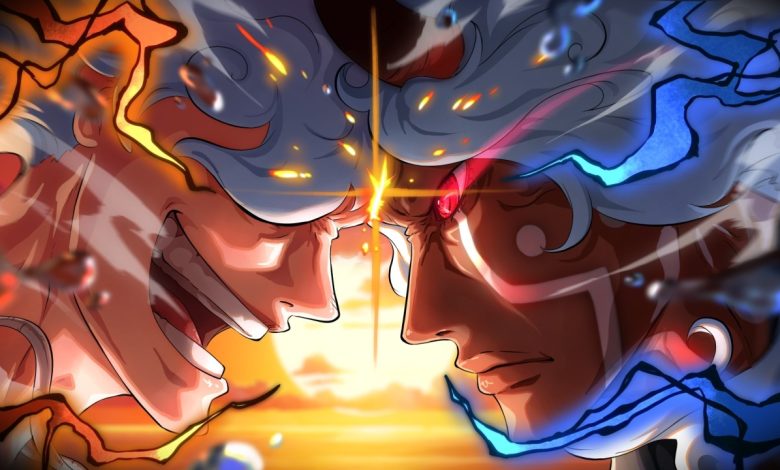
Chapter 1181 gives new scope to the central conflict of One Piece. Beyond the ongoing confrontation on Elbaf, it more clearly outlines the clash between two irreconcilable visions of the world: Imu’s, built on control and domination, and Joy Boy’s, whose legacy Luffy appears to carry through freedom.
This opposition is not limited to a battle between a hero and a hidden ruler. It concerns Devil Fruits, human ambition, fear of the future, the One Piece, and even the meaning of the justice imposed by the World Government.
Imu Against Loki and Luffy: An Unprecedented Threat on Elbaf
The chapter puts Loki in a particularly difficult position. Haunted by his father Harald’s final words, the prince of Elbaf remains focused on his country’s future. Yet Luffy’s preparations to intervene suggest that Loki will not be able to defeat the opponent before him on his own.
Luffy himself admits that he has never felt such a disturbing presence. This detail turns Imu’s arrival into a major event: the ruler of the world has staked everything on entering the field and cannot afford to fail.
The conflict therefore takes on a dimension that goes beyond Elbaf. Behind the urgency of the battle lies the prospect of the final clash between the Sun God and the one seeking to preserve the world order.
Imu’s Omen: A New Form of Power?
Imu manifests his Omen through a genuine arsenal. Among the forms mentioned is Nemesis, a weapon that initially appears to take the shape of a black blade. However, several details suggest that it is not a forged sword comparable to Yoru or Shusui.
Nemesis notably disappears after the attack, suggesting that it may be a weapon temporarily materialized from black smoke or a particular energy. Its name, associated with the Greek goddess of justice, is consistent with Imu’s place at the top of a system dominated by the World Government and its Navy, whose soldiers bear the word “Justice.”
The chapter thus opens up a fascinating possibility: Omen could be connected to an energy opposed to Haki. The kanji associated with this power could also be read as “maki,” conveying the idea of a devilish force in contrast to Haki, often presented as a manifestation of ambition or will.
Under this interpretation, Haki and “maki” would be two powers capable of lying dormant in all things, but operating according to opposing principles. The former is associated with individual will and its offensive, defensive, and royal forms. The latter could be used to materialize weapons such as Nemesis or create demonic defenses.
Caution is still needed, however: the exact nature of Omen, its possible connection to a Devil Fruit, and the precise rules governing this power remain uncertain.
Imu and Joy Boy: Two Opposing Visions of Humanity
The most important aspect of chapter 1181 is arguably ideological. Imu’s speech directly echoes Vegapunk’s theory regarding Devil Fruits. For the scientist, these fruits were born from human desires: they embody the possible paths of evolution people imagine for themselves.
Imu takes the opposite position. Where Vegapunk sees the expression of dreams and multiple possible futures, Imu appears to see danger. The desire to gain power would lead to corruption, then to a pact, before inevitably resulting in domination.
This logic explains his distrust of pirates, forbidden dreams, Poneglyphs, Ancient Weapons, and, above all, the One Piece. If the entire world pursues glory, wealth, power, or truth, then the world can become dangerous to itself. Under such a view, preventing people from seeking the ultimate treasure becomes a way of averting a catastrophe.
This fear connects to the questions raised around the origin of powers in this analysis of Imu and Devil Fruits. The ruler of the world may fear not one specific enemy, but humanity’s collective emancipation.
Domination as a Promise of Security
Imu appears to defend the idea that happiness can only exist under domination. Framed this way, the thought may seem paradoxical: restricting freedom would supposedly protect people from their own excesses.
The principle resembles a rule that limits certain actions in order to make freedom possible for everyone. But in Imu’s case, this protection becomes a vertical, opaque, and imposed system. The issue is therefore not merely the existence of limits: it is the person who alone decides those limits and controls access to the truth.
Joy Boy and Luffy embody another answer. Their ideal is not to dominate the seas or rule over others. Luffy has already stated it: to him, the Pirate King is the freest man in the world. That distinction is essential. Luffy’s dream is not to place the world under his authority, but to live without being subjected to someone else’s.
The final conflict could therefore pit a world controlled in the name of safety against a liberated world, with all the risks that freedom entails.
The Mystery of the Silhouette: Joy Boy, Luffy, or Gold Roger?
A silhouette associated with Imu fuels another major question. The staging may suggest a memory involving Joy Boy, especially because Imu mentions his name. Yet no visual element makes it possible to establish with certainty the era, location, or identity of the man wearing the straw hat.
One hypothesis instead considers a far more recent memory, possibly involving Gold Roger in his youth. Roger shares several traits with Luffy: his laugh, his dream, and the way he leaves a mark on those he meets. The ambiguity may be deliberately maintained through the absence of a face, setting, and clear temporal reference.
This remains a theory. But it serves as a reminder of an important rule in One Piece: a silhouette is not necessarily confirmation. Until Joy Boy’s face and the context of the scene are explicitly shown, several interpretations remain possible.
Is Mihawk Connected to Imu? Clues, but No Certainty
The chapter also reignites discussions surrounding Dracule Mihawk. Imu’s attack strongly recalls a move once used by the world’s greatest swordsman. The comparison is reinforced by the presence of black blades, the two characters’ red eyes, and the mystery surrounding Mihawk’s origins.
His birthplace is not listed in his Vivre Card, while his childhood depicts him isolated and forced to survive. These elements can support the idea of a connection to the World Government, or even to a founding family. The name Dracule may therefore still conceal an important legacy.
But the counterarguments are equally compelling. Similar eyes appear on other characters, and the predator imagery used by Mihawk primarily refers to his Hawkeye nickname. During his duel with Zoro, he presents himself more as a hunter facing prey than as a supporter of the Celestial Dragons’ ideology.
Mihawk does not need to be Imu’s direct descendant to become more important. His past could be expanded upon without calling into question his identity as a solitary fighter seeking an opponent capable of pushing him to his limits. The connection between Mihawk, Zoro, and the stakes surrounding Haki also remains central to Zoro’s recent progress with conscious Conqueror’s Haki.
Why Luffy Can Truly Defeat Imu
In One Piece, Luffy does not defeat his enemies through strength alone. He destroys the belief on which they have built their lives. Crocodile, Doflamingo, and Kaido all saw their worldview fail before a freedom they could not subdue.
Imu could suffer the same fate, but on a far greater scale. His defeat would not depend solely on a final blow: it would depend on proof that people can live freely without destroying one another. Finding the One Piece and using it for good would directly answer the fear underpinning Imu’s domination.
Chapter 1181 does not definitively settle the question of good and evil in the past. However, it finally makes the heart of the conflict clear: Imu seeks to prevent the future out of fear of what it may produce, while Joy Boy and Luffy choose to trust it.
One Piece Chapter 1181 FAQ
What is Imu’s Omen in One Piece?
Omen refers here to the power Imu uses to materialize different forms, including weapons and defenses. The chapter suggests a possible connection to an energy opposed to Haki, sometimes interpreted as a demonic “maki,” but its exact workings have not yet been established.
Why does Imu want to stop the search for the One Piece?
According to the interpretation developed by the chapter, Imu sees human ambition as a threat. The One Piece, the Ancient Weapons, and the search for truth could, in his view, lead the world to ruin. He therefore seeks to preserve order through control.
Is Mihawk really connected to Imu?
Several similarities fuel this theory, including their eyes, their relationship with blades, and Mihawk’s still-unclear past. However, no element confirms a family or direct connection between the two characters.
