
One Piece: Eiichiro Oda Finally Explains Why Flying Devil Fruits Are So Rare

Warning: this article discusses recent elements from One Piece.
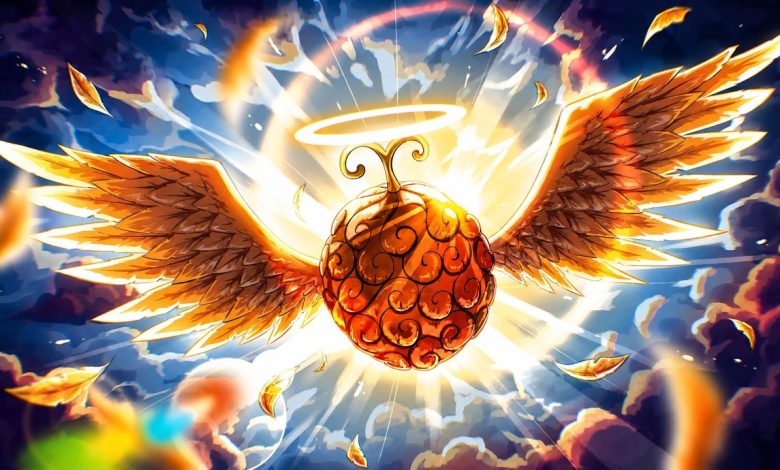
Devil Fruits that allow their users to fly are one of the great curiosities of One Piece. During the Alabasta arc, Pell, the royal guardian who possesses the Tori Tori no Mi, Falcon Model, stated that only five Devil Fruits could grant this ability. Readers remembered that declaration for a long time, before it was contradicted—or at least heavily qualified—by the many characters who later took to the skies.
Eiichiro Oda has finally clarified the meaning of that line. The answer is not to establish a new official list of five fruits, nor to dismiss the abilities that have appeared since Alabasta. Instead, it highlights an important creative rule: in the world of One Piece, flight must remain rare, spectacular, and exceptional so that the importance of the sea, islands, and ships is not lost.
Pell’s statement was not a universal truth
When he mentioned the five Devil Fruits that could grant flight, Pell was primarily speaking based on what he had heard. His statement therefore reflected the information known by the character, rather than an absolute law of the world of One Piece.
This nuance resolves the apparent inconsistency that developed throughout the series. After Alabasta, many Devil Fruit users demonstrated an ability to move through the air, sometimes through an animal transformation and sometimes through a far more unusual ability.
The number of fighters concerned has far exceeded five. Kaido, Marco, King, Doflamingo, Lafitte, Buffalo, Karasu, Jupiter, Morgans, Luffy, and Stronger are among the users cited as being able to fly with the help of their powers. These cases are not necessarily identical: some have wings, others possess a flight-capable Zoan form, while others rely on mechanisms specific to their Devil Fruit.
The key point, then, is this: Pell was not necessarily wrong within the limits of his knowledge. His line simply was not intended to provide an exhaustive account of every possibility in the world.
A limit the author set for himself
Beyond the in-story explanation, Eiichiro Oda gives Pell’s line a more significant meaning. It was also a way for him to set a creative limit. The mangaka could imagine many aerial abilities, but he wanted to avoid overusing them.
This decision directly reflects the very nature of One Piece. The series is built around piracy, navigation, the discovery of isolated islands, and the dangers of the sea. If every character could freely travel the world through the air, some of the constraints that define the adventure would lose their impact.
Traveling by ship would no longer be essential. Sea routes, storms, dangerous areas, and the distance between islands would become far less decisive. Yet in Luffy’s world, reaching an island or escaping an enemy must still depend on a crew, a vessel, and mastery of the seas.
Oda also points out that some of the technologies in this universe could raise a logical question: why not simply build airplanes? His answer lies in the series’ balance. Even if technology can advance very far, One Piece must retain its soul as a pirate manga rather than become a world in which air travel is ordinary.
Why flight remains such a striking power in One Piece
Rarity does not mean that characters capable of flying are almost nonexistent. Rather, it means that this ability must remain remarkable in its presentation and its consequences. Every fighter who takes to the air generally has a strong visual or tactical identity.
Marco, for example, combines flight with his phoenix form and regenerative flames. King follows an entirely different logic through his Lunarian traits and Zoan form. Kaido asserts his power through his dragon transformation, while Doflamingo uses his strings to move above the ground.
Flight is therefore not treated as an ordinary skill shared by every powerful character. It remains tied to abilities, species, or transformations that set their users apart. This approach preserves the element of surprise when an opponent suddenly leaves the ground or dominates a battle from the sky.
It also helps preserve the value of other means of movement. Combat techniques, superhuman leaps, ships, and special abilities all retain their usefulness. Even the most formidable characters cannot all ignore the world’s geographical constraints.
A clarification that matters for Devil Fruit theories
This clarification is a reminder that the information held by characters must be distinguished from the story’s definitive rules. In a universe as vast as One Piece, its inhabitants do not always possess complete knowledge of existing powers, history, or the phenomena that shape the world.
This logic naturally fuels questions about the origin and workings of Devil Fruits. Recent revelations and theories surrounding these powers also play a central role in the events on Elbaf, especially around Imu and the extraordinary abilities seen there. The subject is likewise at the heart of the stakes explored in the analysis of One Piece chapter 1191.
Pell’s case above all shows that an old line can receive a new reading without being erased. The Alabasta statement already foreshadowed a fundamental intention: the sky must not become a route as accessible as the sea.
This principle may also shed light on how Luffy is perceived as his powers evolve. His mobility and forms do not place him in a universe where flight has become normal; on the contrary, they reinforce his exceptional nature. This rise in power remains connected to the major narrative upheavals surrounding the future of Joy Boy, Imu, and the new era, as discussed in the theory about Shanks and his knowledge of the future.
Flight will remain exceptional in the future of One Piece
Eiichiro Oda indicates that he will continue to regard flight as a rare and special ability. He therefore does not promise that no new characters will be able to rise into the air, but he confirms that this ability will remain governed by the overall spirit of the series.
This clarification gives clear coherence to the many examples already seen in the manga. Devil Fruits that allow flight are not limited to five, but they must not turn One Piece into an aerial world. The sea remains at the center of the journey, the ship remains the essential means of transport, and taking flight retains all of its narrative impact.
FAQ: Devil Fruits that allow flight
Did Pell lie about the five Devil Fruits that allow flight?
No. His statement was based on what he had heard and on the character’s limited knowledge. It did not represent a universal rule listing every Devil Fruit in existence.
Why are there so many characters capable of flying after Alabasta?
Several powers allow flight in different ways: Zoan transformations, wings, strings, animal forms, or abilities specific to certain Devil Fruits. These examples do not contradict Pell’s intention, since his statement was not exhaustive.
Why does Oda not want to make flight widespread in One Piece?
Because the series must remain a pirate manga. If everyone could easily travel through the sky, the sea, ships, and the exploration of islands would lose part of their importance.
