

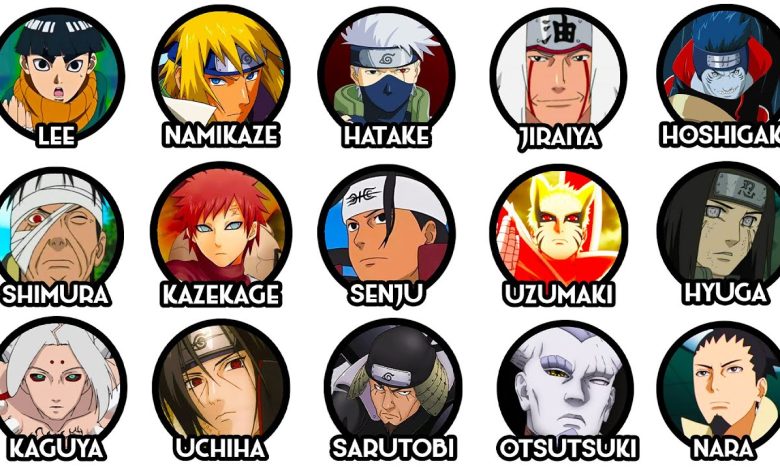
The clans of Naruto are more than just family names. They pass down fighting styles, hereditary techniques, political responsibilities and philosophies that profoundly influence shinobi. Some bloodlines dominate the history of the ninja world, while others stand out through a more discreet yet decisive specialty in the field.
From dōjutsu mastery and elemental transformations to insects, ninja dogs and mind-based techniques, here are the defining traits of the most notable clans in the universe.
The founding clans and bloodlines at the heart of ninja history
Senju, Uchiha and Uzumaki: legacies that changed the world
The Senju clan is one of Konoha’s founding families, alongside the Uchiha. Its name, meaning “a thousand skills,” reflects its versatility and ability to master numerous jutsu. Hashirama Senju, the First Hokage, possessed Mokuton, or Wood Release, which allowed him to create forests, form defenses and control bijū. Tobirama Senju, meanwhile, developed major techniques, including Edo Tensei and an instantaneous teleportation technique.
Opposite the Senju, the Uchiha clan is known for its Sharingan. This dōjutsu makes it possible to perceive chakra, anticipate movements and copy many techniques. Its advanced forms, including the Mangekyō Sharingan, grant access to powers such as Amaterasu, Tsukuyomi and Susanoo. A founding clan of Konoha, the Uchiha nevertheless suffered a major tragedy when Itachi Uchiha carried out their massacre on the orders of the village’s leaders.
Distant relatives of the Senju, the Uzumaki are renowned for their immense chakra reserves, longevity and mastery of fūinjutsu, the art of sealing. Originally from the Hidden Eddy Village, they were scattered after their village was destroyed. The Eight Trigrams Seal, used to imprison Kurama within Naruto, illustrates their expertise. Kushina Uzumaki could also use powerful chakra chains to restrain opponents, including bijū. To explore the origins and role of these creatures further, read our guide to Naruto’s nine bijū and the Ten-Tails.
Hyūga and Ōtsutsuki: the power of dōjutsu
The Hyūga clan is one of Konoha’s most prestigious families. Its Byakugan provides nearly complete vision, allows its users to see through objects and reveals the chakra network. The Hyūga use the Jūken, or Gentle Fist, a fighting style that strikes chakra points to disrupt an opponent’s flow and inflict internal damage.
The family is divided between the main branch and the branch family. The latter is tasked with protecting the former, a hierarchy that created deep tensions, particularly because of the seal imposed on its members.
Above these bloodlines stands the Ōtsutsuki clan, which originates from another dimension. Its members possess immense chakra, can absorb their opponents’ chakra and travel between dimensions. Their history is tied to the Divine Tree, chakra fruits, Kaguya Ōtsutsuki and the very origin of chakra. Hagoromo and Hamura sealed the Ten-Tails before separating its chakra into several bijū. Momoshiki, Kinshiki and Isshiki later embody the ongoing threat posed by this clan with extraordinary powers.
Konoha’s strategic clans
Nara, Yamanaka and Akimichi: the Ino-Shika-Chō alliance
The Nara, Yamanaka and Akimichi clans form an alliance passed down from generation to generation: Ino-Shika-Chō. Their complementary techniques make them an exceptionally effective tactical force.
The Nara manipulate shadows to restrain, control or strangle their targets. They are also associated with managing a forest that provides medicinal plants. Shikamaru Nara perfectly represents the clan’s strategic intelligence: beneath his laid-back temperament lies the ability to predict enemy actions and turn a critical situation around.
The Yamanaka specialize in mind-related jutsu. Their Mind Body Switch Technique allows them to project their consciousness into a target’s body, but leaves their own body vulnerable. Telepathy, body disruption and mental interrogation also make them essential allies in intelligence work. Ino Yamanaka carries on this legacy, as does Inojin, who combines his mother’s abilities with his father’s artistic talents.
The Akimichi convert calories into chakra to increase their mass and strength. Their Expansion Jutsu, Human Bullet Tank and Butterfly Mode give them formidable physical power. Chōji Akimichi embodies the strength, loyalty and kindness that characterize this clan.
Shimura, Sarutobi, Hatake and Namikaze: serving Konoha
The Shimura clan is more closely associated with political influence, espionage and covert operations than with a hereditary technique. Danzō Shimura, leader of Root, symbolizes the desire to act from the shadows to protect Konoha, even at the cost of morally questionable choices.
The Sarutobi clan is recognized for its sense of duty, loyalty and mastery of Fire Release. Hiruzen Sarutobi, the Third Hokage, mastered all five elemental transformations and could summon Enma, the Monkey King. Asuma passed his values on to Team 10, while Konohamaru continues the family legacy.
Among the Hatake, Sakumo, Konoha’s White Fang, and Kakashi demonstrate remarkable mastery of combat and strategy. Sakumo was feared for his use of a white chakra saber. Kakashi, who became known as the Copy Ninja thanks to the Sharingan he received from Obito, also created the Chidori.
The Namikaze clan remains poorly documented, but Minato Namikaze left an immense mark. Nicknamed Konoha’s Yellow Flash, the Fourth Hokage used the Flying Thunder God Technique to teleport to marks placed in advance. He was also the creator of the Rasengan.
Specialists in combat, tracking and infiltration
The Inuzuka clan fights alongside ninja dogs, or ninken. Its members possess highly developed senses of smell and hearing, making them excellent trackers. With Akamaru, Kiba Inuzuka notably uses the Gatsūga, a drill-shaped spinning attack, as well as coordinated transformations with his partner.
The Aburame clan maintains a symbiotic relationship with kikaichū, insects that live inside their users’ bodies and feed on their chakra. These insects can drain an enemy’s chakra, form defenses, track a target or carry out infiltration missions. Shino Aburame uses these abilities with calm and precision.
The Lee clan is not based on a hereditary technique, but on taijutsu, discipline and self-improvement. Unable to use ninjutsu or genjutsu, Rock Lee became a symbol of perseverance. His mastery of the Eight Inner Gates, like that of his teacher Guy, allows him to surpass the body’s physical limits at the cost of extreme risks. Metal Lee carries on this legacy in Boruto.
Less well known, the Izuno stand out through their senses, adaptability and strategic thinking. They fulfill reconnaissance, logistical support and planning roles. Tsubaki Izuno represents this ability to rapidly analyze complex situations. The Onikuma, whose name evokes the “demon bear,” instead favor brute strength, endurance and chakra-enhanced physical abilities.
The clans of Kiri and their fearsome powers
The Kaguya clan, originating in the Land of Water, possessed the Shikotsumyaku, a hereditary technique that allows users to manipulate their own skeleton and turn their bones into weapons or armor. Brutal and warlike, the clan nearly disappeared after recklessly attacking the Hidden Mist Village. Kimimaro, its last known active member, revealed the full danger of this ability despite suffering from a fatal illness.
The Hōzuki can liquefy their bodies to evade physical attacks, slip through narrow spaces and surprise their enemies. Suigetsu and Mangetsu Hōzuki are the most notable representatives of this bloodline, which is closely associated with Water Release and the history of the Seven Ninja Swordsmen of the Mist.
The Terumi clan masters advanced nature transformations. Mei Terumi, the Fifth Mizukage, combines Water and Fire to produce corrosive vapor, as well as Earth and Fire to manipulate lava. The Hoshigaki clan, represented by Kisame, also stands out through its affinity for water and shark-like physiology. Kisame could breathe underwater and merge with Samehada to further increase his power.
Finally, Yagura Karatachi, the Fourth Mizukage and jinchūriki of Isobu, marked a dark period in Kiri’s history. Under his reign, the village gained the reputation of the “Bloody Mist” because of its especially brutal methods.
Rare bloodlines and more mysterious families
The Kurama clan possesses a genjutsu capable of affecting both the victim’s mind and body, to the point of causing real injuries. This immense power can be accompanied by a destructive split personality. Yakumo Kurama is the only known user of this ability in the series.
The Shinoike clan, originating in the Land of Lightning, wields the Ketsuryūgan, or Blood Dragon Eye. This dōjutsu allows users to manipulate iron-rich liquids, including blood, and produce especially powerful genjutsu. Exiled to the Valley of Hell, the clan survived in the shadows. Chino is one of its notable representatives.
Jiraiya’s family is neither named nor developed in detail, but his legacy is associated with curiosity, exploration and the pursuit of knowledge. These values are reflected throughout his journey, from his training at Mount Myōboku to passing his teachings on to Minato and Naruto.
The group from which Jūgo originates naturally absorbs nature energy. This ability increases physical power and can trigger monstrous transformations, but it also causes uncontrollable fits of rage. This power served as the basis for the cursed seals used by Orochimaru. Jūgo illustrates the tragic dimension of this ability, torn between his gentle nature and violent urges.
FAQ about Naruto clans
Which is the strongest clan in Naruto?
The Ōtsutsuki stand at the top because of their powers tied to chakra, dimensions and the Divine Tree. Among human clans, the Senju, Uchiha, Uzumaki and Hyūga are among the most influential.
Which clans make up Ino-Shika-Chō?
This alliance brings together the Yamanaka, Nara and Akimichi clans. Their mind-based, restraining and physical-power techniques are designed to work together.
Why is the Uzumaki clan associated with seals?
The Uzumaki specialize in fūinjutsu. Their seals can contain chakra, people or dangerous forces, such as Kurama in Naruto’s case.
Clans are therefore one of the narrative pillars of Naruto: they pass down strength, but also conflicts, responsibilities and a collective memory. This importance of family legacies and inherited wills also appears in other major sagas, as shown by the mystery of the D. Clan in One Piece.
