
One Piece Chapter 1194: Mihawk’s Conqueror’s Haki and Zoro’s Conscious Awakening

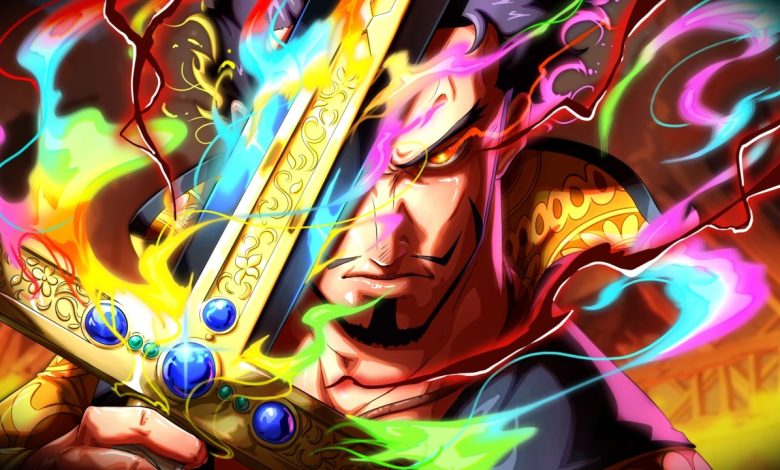
Chapter 1194 marks a turning point for Zoro
Chapter 1194 of One Piece puts Roronoa Zoro up against an obstacle that cannot be overcome through physical strength alone: Sommers and his regeneration. Despite landing several blows, the swordsman is initially unable to neutralize his opponent. This deadlock forces him to rethink both his way of fighting and his own relationship with Conqueror’s Haki.
The lightning surrounding his blades then signals a decisive development. Zoro no longer seems to unleash this power by accident, as he did in previous fights. Instead, he begins to understand that he possesses this strength and must learn to wield it consciously.
This distinction is essential: Conqueror’s Haki is not portrayed as an automatic reward for training. It is an innate power, tied to ambition and a person’s deepest disposition. For Zoro, whose entire journey has always been built on effort, pain, and physical self-improvement, this realization is especially disorienting.
Why Sommers brings Zoro back to his first defeat against Mihawk
Zoro’s fight against Sommers echoes one of his defining scenes. The Holy Knight compares the swordsman to a frog unable to escape a snake. This image directly recalls Dracule Mihawk’s words during their first meeting in Chapter 51, when Zoro was described as a frog trapped at the bottom of a well.
The parallel is meaningful. Since East Blue, Zoro has crossed the New World, faced increasingly dangerous opponents, and earned considerable renown. Yet when Sommers taunts him, he is symbolically taken back to his original helplessness: that of the young swordsman who did not yet have the means to reach his goal.
This time, however, the situation changes. Zoro’s attacks eventually affect Sommers’ regeneration, as his hand no longer reforms normally. The chapter therefore connects his Conqueror’s Haki to the kind used against figures such as Xebec or Scopper Gaban, who can disrupt or slow the regenerative abilities of the Holy Knights.
Zoro’s bandana, the series’ traditional sign that he is serious, accompanies this moment. Putting it back on emphasizes that the swordsman is not merely striking harder: he is changing his very understanding of what makes him strong.
Enma, King, and the first involuntary awakening of Conqueror’s Haki
Zoro’s difficulty with Conqueror’s Haki dates back to Wano. His potential is first noticed after his attack on Kaido, when he inflicts a lasting wound on him. However, Zoro does not seem fully aware of the nature of the power he has just used.
Enma’s role is then decisive. Oden’s katana, forged by Shimotsuki Kozaburo, pushes its wielder to release an excessive amount of Ryuo, or Armament Haki. Its violent nature forces Zoro to draw on his reserves and reveal his ambition. Against King, he infuses his swords with Conqueror’s Haki for the first time, even though he does not yet truly understand the phenomenon.
That victory therefore does not mean his learning is complete. Enma triggered an awakening, but Zoro still has to understand what lies within him. After Onigashima, he cannot simply reproduce that infusion at will, even in fights with enormous stakes.
Chapter 1194 consequently gives new meaning to Zoro’s statement that he is “still in training.” His problem is not a lack of work. On the contrary, he has spent his entire life training. His obstacle is that he wants to conquer through effort a power that cannot be acquired like an ordinary sword technique.
Scopper Gaban and Mihawk: understanding that Haki must be recognized
Scopper Gaban had already pointed Zoro in the right direction by reminding him that Haki is useful only if its wielder knows how to use it. Zoro is physically accustomed to this strength, but he must still clearly acknowledge its presence and potential.
Memories of Mihawk’s words complete this progression. The world’s greatest swordsman explains that Conqueror’s Haki cannot be gained through training. This wording echoes Silvers Rayleigh’s lesson to Luffy in Chapter 597, as the future Pirate King prepared on Rusukaina.
The parallel between the two chapters is especially striking: 597 chapters separate Rayleigh’s teaching to Luffy from Mihawk’s words returning to Zoro’s mind. While Luffy learned to identify his royal power, Zoro must accept that his desire to become the greatest swordsman has already given him the ambition of a king.
This also sheds light on his reaction on Fish-Man Island, after Luffy knocked out ten thousand opponents with Conqueror’s Haki. Zoro then considered such power the bare minimum required of their crew’s captain. His words now carry another meaning: Mihawk had likely already introduced him to the idea of this particular form of Haki.
Does the chapter truly confirm Mihawk’s Conqueror’s Haki?
Chapter 1194 does not directly show Mihawk unleashing Conqueror’s Haki. It does, however, provide a very strong clue: he knows the innate nature of this power precisely, as well as the fact that it cannot be obtained through training alone.
In this context, the idea that Dracule Mihawk possesses Conqueror’s Haki seems stronger than ever. His status as the world’s greatest swordsman, his role as Zoro’s master, and the exceptional nature of his black blade Yoru all reinforce that interpretation. A joke from Perona about Conqueror’s Haki users and beards also adds a small wink toward the character.
Still, narrative implication must be distinguished from explicit proof. The manga appears to be steering readers toward this conclusion without yet providing a scene in which Mihawk openly uses his royal Haki. That anticipation naturally fuels speculation about his eventual duel with Zoro.
The character remains especially central because his fight with Zoro is one of the series’ oldest objectives. To better place Mihawk within the series’ power dynamics and pirate history, see also our look at why Garp remains one of One Piece’s strongest figures.
Black blades: Zoro’s next milestone?
Zoro’s Conqueror’s Haki is also connected to the mystery of black blades. Since Dressrosa and Wano, the swordsman has wondered how Ryuma turned his blade permanently black. Mihawk possesses Yoru, while Ryuma is associated with Shusui; in the story, they are presented as the only swordsmen to have achieved this feat.
The chapter fuels the theory that infusing a blade with Conqueror’s Haki may be essential to this permanent transformation. Zoro already knows how to temporarily blacken his blades with Armament Haki, but that coating fades away. An eternal black blade is therefore a different, more mysterious, and more ambitious stage.
Wado Ichimonji could naturally become the emotional core of this quest. The blade is tied to Kuina and to Zoro’s foundational promise. Turning it black would represent far more than a power-up: it would be the culmination of his path as a swordsman.
Chapter 1194 does not yet confirm the exact process required to forge a black blade. It does, however, clearly bring together Zoro’s kingly ambition, Mihawk’s legacy, and this ultimate goal. As with the bearers of D., whose destinies span the great eras of the world, individual ambitions seem to play a major role in the secrets of One Piece. Learn more about the members of the D. Clan and their legacy.
FAQ: Mihawk’s Haki and Zoro in Chapter 1194
Has Zoro finally mastered Conqueror’s Haki?
The chapter primarily shows major progress: Zoro appears to use Conqueror’s Haki consciously after first manifesting it involuntarily in Wano. However, his mastery still seems to be developing.
Does Mihawk officially possess Conqueror’s Haki?
The chapter offers very strong clues through his words on the innate nature of Conqueror’s Haki. However, it still does not show Mihawk directly using this power in battle.
Why could Zoro not solve this problem through training?
Because Conqueror’s Haki is not an ability gained through practice. Above all, Zoro needed to become aware of his ambition and of the power that was already within him.
What is the connection between Conqueror’s Haki and black blades?
The connection has not been explicitly explained, but the chapter strengthens the idea that royal Haki could be an essential component in permanently turning a blade into a black blade.
